
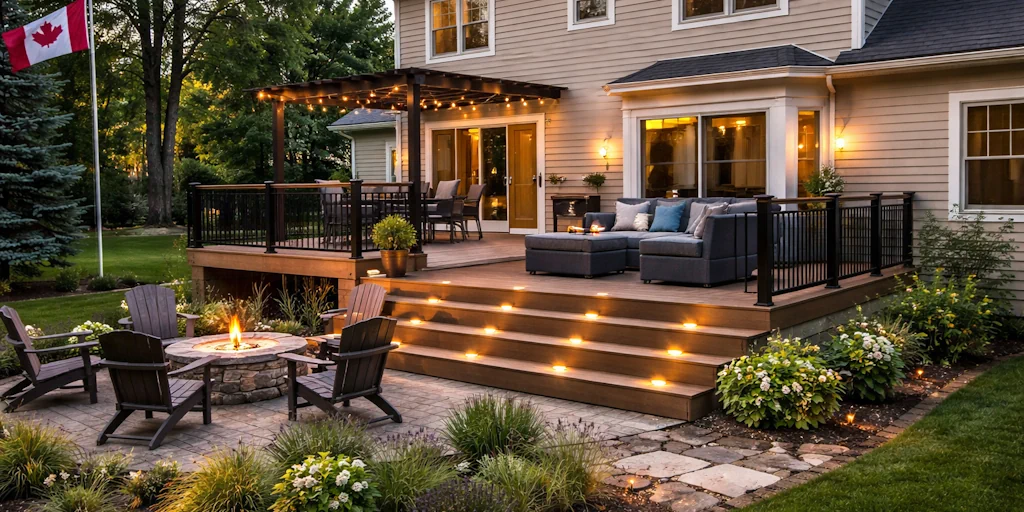
Is a Deck a Good ROI for Canadian Homes?
Ottawa homeowners often ask if adding a deck will pay off when it’s time to sell. The answer depends on factors, including cost, return on investment (ROI), and how well the deck is built and maintained. In Canada’s capital region, where summers are sweet but short, a deck can offer great lifestyle perks and a solid boost to resale value. However, costs vary widely, especially between a brand-new deck and a renovated one, so it’s important to weigh your options in terms of dollars and curb appeal.
New Deck Installation Costs in Ottawa
Building a new deck in Ottawa can range significantly in price. Factors include size, material, and design complexity. On average, expect roughly $20–$75 per square foot for a fully built deck. For example, a basic 12×12 ft pressure-treated wood deck might cost around $3,500–$4,500, while the same size in high-end composite could be $6,000–$10,000. Larger decks (20×20 ft) naturally cost more, roughly $7,000–$9,500 with standard lumber versus $12,000+ if using premium composite boards. Wood (especially pressure-treated wood or cedar) is usually cheaper upfront, whereas composite decking and PVC come at a premium for their low maintenance and durability.
Deck Renovation and Restoration Costs
Upgrading an existing deck is often more budget-friendly than building new. Refinishing a deck (cleaning, sanding, and staining the surface) might run about $3–$7 per sq ft, an inexpensive cosmetic refresh. Resurfacing – meaning replacing old boards and railings but keeping the underlying frame – typically costs $15–$25 per sq ft with new wood, or $35–$50 per sq ft if upgrading to composite materials. In Ottawa terms, that could be a few thousand dollars to give a tired deck new life, compared to $30–$60+ per sq ft for a complete rebuild if the structure is unsafe. The key is the condition of your deck’s foundation: if the posts and joists are solid, you can save a lot by restoring instead of starting from scratch.
Deck ROI in Ottawa’s Housing Market
So, is a deck worth the investment? In Ottawa’s housing market, a well-built deck often recoups around 60–80% of its cost in increased home value. In other words, while you might not get every dollar back at resale, you’ll add significant value. Material choice can influence ROI: a classic wood deck tends to yield a higher percentage return (often around 65–75% ROI) because of its lower cost, whereas a pricier composite deck might see closer to 60% ROI. For instance, spending $15,000 on a new deck could raise your home’s price by roughly $9,000–$12,000 in value. Keep in mind that quality and design matter – a high-quality build with an attractive design will appeal to buyers and maximize that ROI. Additionally, composite or PVC decks may hold their value longer over time (thanks to minimal upkeep), which benefits homeowners who aren’t selling right away.
Resale Value and Curb Appeal Benefits
A deck doesn’t just add square footage; it enhances your home’s appeal. Real estate agents often talk about curb appeal, and while a deck is in the backyard, it still plays a huge role in first impressions. A clean, well-designed deck visible from the yard or through windows can make a home feel more inviting even before buyers step inside. It visually extends the living space and signals that the property is well cared for. In fact, modern buyers place a high value on outdoor living – one survey found that over half of home seekers rank a great outdoor space as one of the most attractive features in a home. A beautiful deck can set your property apart in the Ottawa market, where many families appreciate having a ready-made space for barbecues and summer gatherings. Especially in the wake of recent stay-at-home trends, demand for quality outdoor areas has surged – homes with decks and patios often sell faster or at higher prices because buyers see added lifestyle value.
Seasonal Factors in Ottawa (Climate and Deck Use)
Ottawa’s climate is a tale of two extremes: hot summers and frigid winters. How does this affect your deck’s ROI and usefulness? During the warm months from late spring to early fall, a deck can effectively become an extra living room. Buyers envision themselves grilling in July or relaxing outside on a pleasant September evening – this emotional appeal adds to perceived value. In the winter, of course, an open deck sees limited use, but that doesn’t erase its value. A well-designed deck is a four-season asset in the psychology of home buying: even in January, buyers will note the deck and plan for the fun they’ll have come summer. That said, Ottawa’s heavy snow and freeze-thaw cycles do mean you’ll need to choose materials and finishes wisely. Wood decks require sealing and staining to withstand harsh weather, and it’s wise to clear heavy snow loads to protect the structure. Some homeowners add features like pergolas, awnings, or outdoor heaters to extend deck usability into spring and fall. While the short summer might slightly temper how much cash value a deck adds (compared to a milder climate where outdoor living is year-round), in Ottawa, it can actually enhance ROI differently: because nice weather is at a premium, a great deck becomes a highly desirable feature for those precious sunny months.
Maintenance and Restoration: Boosting ROI
Proper deck maintenance isn’t just about preserving wood – it’s about preserving value. A deck that’s weathered, peeling, or has wobbly railings can actually hurt your home’s appeal. Prospective buyers might see a neglected deck and mentally subtract the cost of repairs from their offer (or be turned off entirely). On the other hand, a well-maintained or recently restored deck signals pride of ownership and can boost your sale price. In fact, studies indicate that a deck in great shape can offer around a 70–80% ROI when you sell, meaning the money you put into repairs or refurbishments comes back as added value. Simple upkeep like power-washing, re-staining the wood, and fixing loose boards goes a long way. If your deck’s structure is sound, consider investing in resurfacing: new deck boards and railings can make it look brand new at a fraction of the cost of a rebuild. Not only will this upgrade attract buyers, but it also removes a potential objection (“we’d have to fix the deck”) from the negotiation table. In short, maintenance pays off by protecting your deck’s condition and thus protecting your ROI.
New Build vs. Restoring an Old Deck – When to Invest
Should you tear down an old deck and build new, or simply repair and upgrade what you have? The decision comes down to the deck’s condition and your goals. Repairing an existing deck is far more economical if the frame and footings are still solid. For example, if only the surface boards are worn out or the paint is peeling, a restoration (new decking, maybe new rails) will breathe new life into the structure for much less money than starting over. This makes sense when the existing deck’s size and layout still work for you, and you just need to fix cosmetic or minor issues. However, if there’s extensive rot or structural problems – say the joists, posts, or ledger board are compromised – then a full replacement is the wise (and safe) choice. You don’t want to put new boards on a shaky foundation. Also consider the bigger picture: a deck rebuild is an opportunity to reimagine the space. Maybe your old deck was too small, or lacked privacy, or didn’t have the built-in seating you now want. Building new lets you upgrade the design, add amenities like a better staircase or a pergola, and perhaps use longer-lasting materials. From an ROI perspective, don’t overbuild for your home’s value – a modest home may not get a full payback on an elaborate $50,000 deck. The sweet spot is to have a deck that matches your home’s style and neighborhood: one that enhances the property without overspending. In many cases, investing a moderate sum to restore a deck yields the best return, whereas a brand-new deck is best justified when the old one is beyond saving or when you plan to enjoy the upgrade for years to come before selling.