
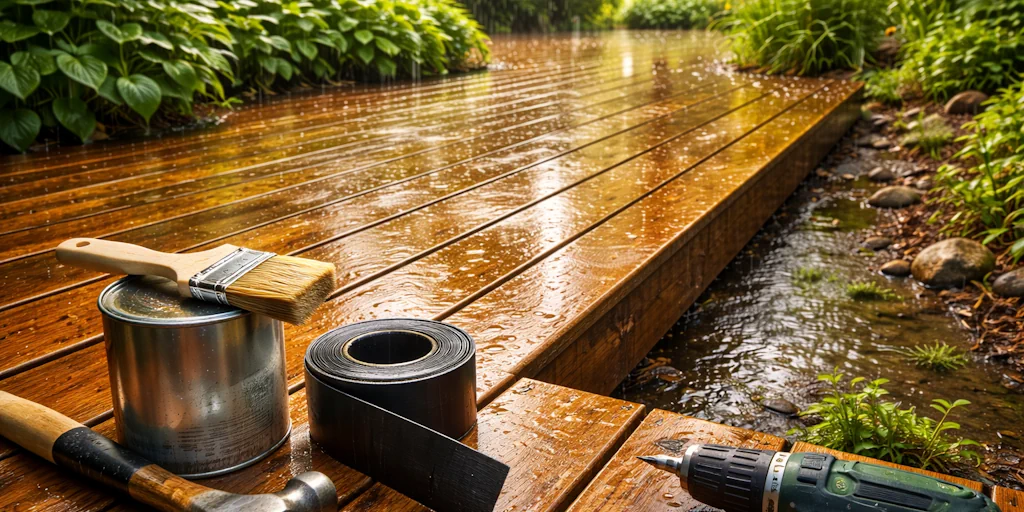
How to Prevent Deck Rot in Wet Canadian Springs?
Wet spring weather in Ottawa puts every wood deck at risk. Snow melts fast. Rain falls hard. There are water pools between boards and around posts. If you ignore early warning signs, deck rot spreads through joists, beams, and surface boards. Structural damage follows.
You can prevent it. You need discipline, proper materials, and seasonal maintenance.
Control Water Before It Sits
Standing water causes rot. Stop it first.
Check the deck slope. Boards must angle slightly away from the house. Even a minor pitch allows runoff. If water pools near the ledger board, fix it immediately.
Clear debris weekly in the spring. Wet leaves trap moisture. Dirt clogs gaps between boards. Use a stiff broom. Sweep along the grain.
Inspect spacing between boards. Wood expands during damp weather. If boards sit tight with no gap, water cannot drain. During rebuilds or board replacement, maintain consistent spacing of at least 1/8 inch.
Install proper drip edges and flashing where the deck connects to your home. Water often seeps behind the ledger board. That hidden moisture causes rot inside the structure before you discover surface damage.
Seal Every Vulnerable Surface
Unsealed wood absorbs water like a sponge.
Apply a high-quality water-repellent stain every two to three years. Choose products designed for Canadian freeze-thaw cycles. Ottawa weather shifts from soaking rain to overnight frost in early spring. Wood expands and contracts rapidly.
Coat all horizontal surfaces evenly. Pay close attention to end grains. Cut ends soak up more moisture than flat surfaces. Brush sealant into these areas generously.
Do not ignore undersides. During renovations, seal joists and beams before installing deck boards. That step blocks moisture from rising through the structure.
Protect Structural Components
Surface boards show early signs of damage. Structural rot hides below.
Crawl under your deck each spring. Use a flashlight. Check joists, beams, and posts. Press a screwdriver into suspicious areas. Solid wood resists pressure. Soft wood sinks easily.
Replace compromised sections immediately. Do not patch over them. Structural rot spreads.
Install joist tape along the top of joists during construction or rebuilds. This waterproof barrier prevents water from sitting on flat framing surfaces. It extends the life of pressure-treated lumber.
Ensure the deck posts are sitting on concrete footings above soil level. Direct ground contact accelerates rot. If posts touch soil, correct them during restoration.
Improve Airflow and Sun Exposure
Airflow dries wood. Stagnant air keeps it wet.
Trim back shrubs and tree branches around your deck. Increase sunlight exposure. Even partial sun helps dry boards after rain.
If skirting encloses your deck, add ventilation openings. Cross-ventilation allows trapped moisture to escape. Without airflow, damp air lingers beneath the structure.
Avoid storing firewood or sealed containers under the deck. These block air movement and hold moisture.
Clean Early in the Season
Spring cleaning prevents biological growth.
Wash your deck once the snow clears, and temperatures remain above freezing. Use an oxygen-based cleaner. You have to scrub along the grain. Rinse thoroughly.
Algae and mould hold moisture against wood fibres. Remove them before they spread.
Do not use high pressure. Pressure washers above 1,500 PSI damage wood fibres and open the surface to faster water absorption.
Watch the Ledger Board Carefully
The ledger board connects your deck to your home. It carries weight. It also traps water.
Check flashing every spring. Look for gaps or corrosion. Replace damaged flashing immediately.
Seal all fastener penetrations. Tighten loose bolts. Water often seeps around hardware.
If you discover staining on interior basement walls near the ledger area, inspect the connection. Moisture intrusion there can affect both deck structure and home framing.
Choose Better Materials During Rebuilds
If you rebuild or renovate a deck, then select materials that resist moisture.
Use modern pressure-treated lumber rated for ground contact, even for above-ground framing. Consider composite boards for the surface. Composite resists rot, though framing still requires protection.
Stainless steel or coated fasteners prevent corrosion. Rusted fasteners weaken connections. They allow movement, which opens gaps for water.
Quality materials reduce maintenance. They do not remove the need for it.
Act Before Damage Spreads
Small cracks widen during freeze-thaw cycles. Minor softness becomes structural failure.
Inspect your deck at the start and end of every wet season. Repair early. Seal exposed areas quickly. Keep water moving off the surface.
A well-maintained deck withstands Ottawa’s wet springs. It stays solid. It stays safe. It lasts decades instead of years.
Preventing deck rot requires attention, not luck. Control water. Seal wood. Maintain structure. Stay consistent every spring.