
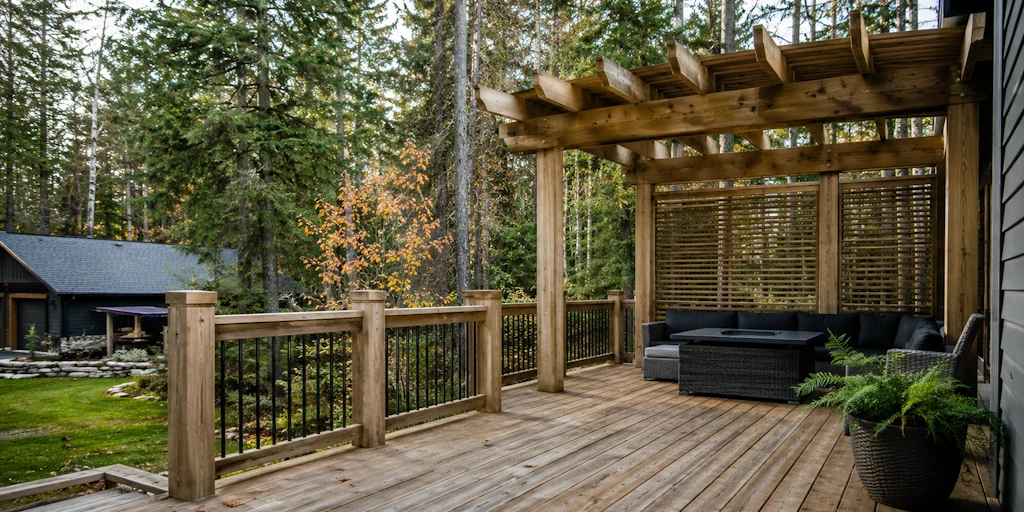
How Long Does Pressure-Treated Wood Last in Canada?
Pressure-treated wood lasts 15 to 25 years in most Canadian backyards. Posts and framing buried in the ground or sitting close to soil often reach 25 to 40 years because they carry a heavier dose of preservative. Deck boards wear out first. They take the sun, the snow shovel, the foot traffic, and the spring melt all at once.
Those numbers assume the wood was rated for the job and someone looked after it. Skip the maintenance, and a deck in Ottawa can look rough in eight years. Stay on top of it, and 25 years is realistic.
What the treatment actually does
Mills force a copper-based preservative deep into the lumber under pressure. In Canada, that usually means ACQ or copper azole, which replaced the old CCA formula for residential use in 2004. The copper stops rot fungi and carpenter ants from treating your deck like lunch.
Here is the part most homeowners miss. The treatment protects against rot and insects. It does nothing against water itself. Untreated against moisture, the boards still soak up rain, swell, dry out, crack, and cup. The wood will not rot for decades, but it can split and warp long before that if you never seal it.
Why the Canadian climate is hard on it
Ottawa swings from minus 30 in January to plus 30 in July. That freeze-thaw cycle is the real enemy. Water gets into a small surface check in October, freezes, expands, and pries the crack wider. Repeat that 50 or 60 times a winter for a decade and you get splintered, greying boards.
Snow makes it worse. A deck that holds a metre of snow until April stays wet for months. Shaded north-facing decks dry slowly and grow algae. Sun south-facing decks dry fast but crack more. Neither side of the house gets a free pass.
Above-ground vs ground contact ratings matter
Check the end tag before you buy. Ground contact lumber (UC4 in the Canadian standard) carries roughly twice the preservative of above-ground stock (UC3). Use above-ground boards for posts or joists near soil, and you can cut their life in half. A lot of failed decks come down to this one shortcut, not the brand of wood.
How to get 25 years instead of 12
Let new lumber dry for a few months, then stain or seal it. Re-coat every two to three years. Sweep off leaves and pine needles before winter, since wet debris holds moisture against the surface. Shovel with a plastic blade, never metal. Keep a couple of inches of clearance between any wood and the soil, and make sure water drains away from posts instead of pooling around them.
The structure underneath deserves attention. Joists and beams stay drier than deck boards, so they typically outlast the surface by years. That is why replacing worn boards on a sound frame is often a smart middle path between a repair and a full rebuild.
When it is time to replace
Press a screwdriver into the wood near posts and stair stringers. If it sinks in easily, rot has begun. Soft spots, wobbly railings, rusted fasteners, and boards that flex underfoot are all signs that the deck is past saving with a coat of stain. At that point, a rebuild with properly rated lumber, or a switch to composite decking, makes more sense than chasing repairs.
The bottom line
Plan on 15 to 25 years for a pressure-treated deck in Canada, longer for the framing, shorter if it never sees a drop of sealer. The wood is cheap, strong, and proven in our climate. What you get out of it depends almost entirely on the rating you buy and the two hours of maintenance you give it each spring.
A local deck builder who works with Ottawa’s frost depths and permit rules can tell you within minutes whether your deck needs new boards, a new frame, or just a good cleaning and a coat of stain.